


GSM Gateway vs VoIP: What's the Difference?


Businesses are always searching for trusted and affordable solutions to handle voice calls in today's commercial communication settings. VoIP (Voice over Internet Protocol) systems and GSM Gateways are two common technologies that are frequently pointed out. Both provide voice communication, but they function differently and meet various business requirements. Organizations can select the best option for their communication infrastructure by being aware of these changes.
What is a GSM Gateway?
A GSM Gateway is a device that links a mobile network to a VoIP platform, PBX, or phone system. Instead of using normal landlines, it routes calls via GSM networks using SIM cards from mobile network providers.
GSM gateways are mainly used by businesses to lower calling costs, particular when making a lot of mobile-to-mobile calls. In contact centers, businesses, and telecom settings where dependable mobile network connectivity is crucial, these devices are highly used.
Key Benefits of GSM Gateways
Lower mobile calling costs
Direct access to GSM networks
Improved call routing flexibility
Backup communication during internet outages
Easy integration with existing PBX systems
At Gsmgateway.in, businesses can find advanced GSM Gateway solutions designed for seamless communication and cost optimization.
What is VoIP?
VoIP, or voice over internet protocol, is a technology that makes it possible to send voice calls over the internet instead than using normal phone networks. VoIP changes voice signals into digital data packets and forwards them via an internet connection rather than using a landline or mobile infrastructure.
Key Benefits of VoIP
Reduced international calling expenses
Remote work support
Advanced features such as call recording and conferencing
Easy scalability for growing businesses
Integration with CRM and business applications
GSM Gateway vs VoIP: Major Differences
1. Network Dependency
For call processing, a GSM gateway uses SIM cards and cellular networks. In contrast, VoIP is totally dependent on internet access. A GSM Gateway might offer a more dependable means of communication if internet access is slow.
2. Cost Structure
VoIP typically has lower costs for international calls. For companies that regularly call mobile lines inside the same network, GSM gateways can greatly lower costs.
3. Business Use Cases
Call centers, telecom companies, and companies with a large volume of mobile calls are the best candidates for GSM gateways. VoIP is better for businesses that need advanced collaboration tools, worldwide connectivity, and telephony.
Which Solution Should Your Business Choose?
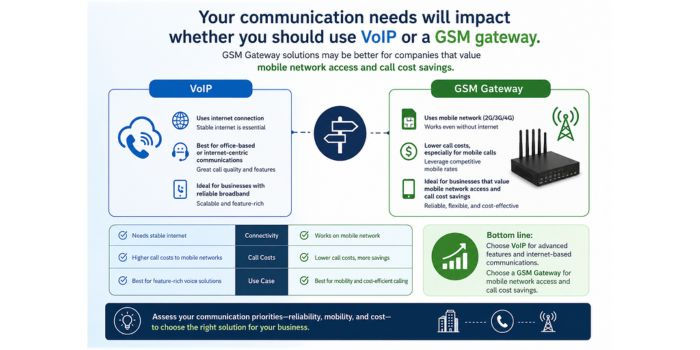
Your communication needs will impact whether you should use VoIP or a GSM gateway. GSM Gateway solutions may be better for companies that value mobile network access and call cost savings. VoIP may be ideal for companies that value remote staff, internet-based communication, and global operations.
Expert Recommendation
Many current businesses use a hybrid strategy that combines VoIP and GSM Gateway technology. This configuration offers increased operational range, communication backup, and cost savings.
Conclusion
VoIP and GSM gateway technologies are both very useful for commercial communication. VoIP offers internet-based flexibility and complex services, whereas GSM Gateways use mobile networks for dependable and affordable calling. You can find the best option by going over your infrastructure, budget, and business needs.
For businesses seeking trusted GSM Gateway solutions, Gsmgateway.in offers reliable products and expertise to support modern communication requirements.


Comments