


IVR Problems Businesses Face

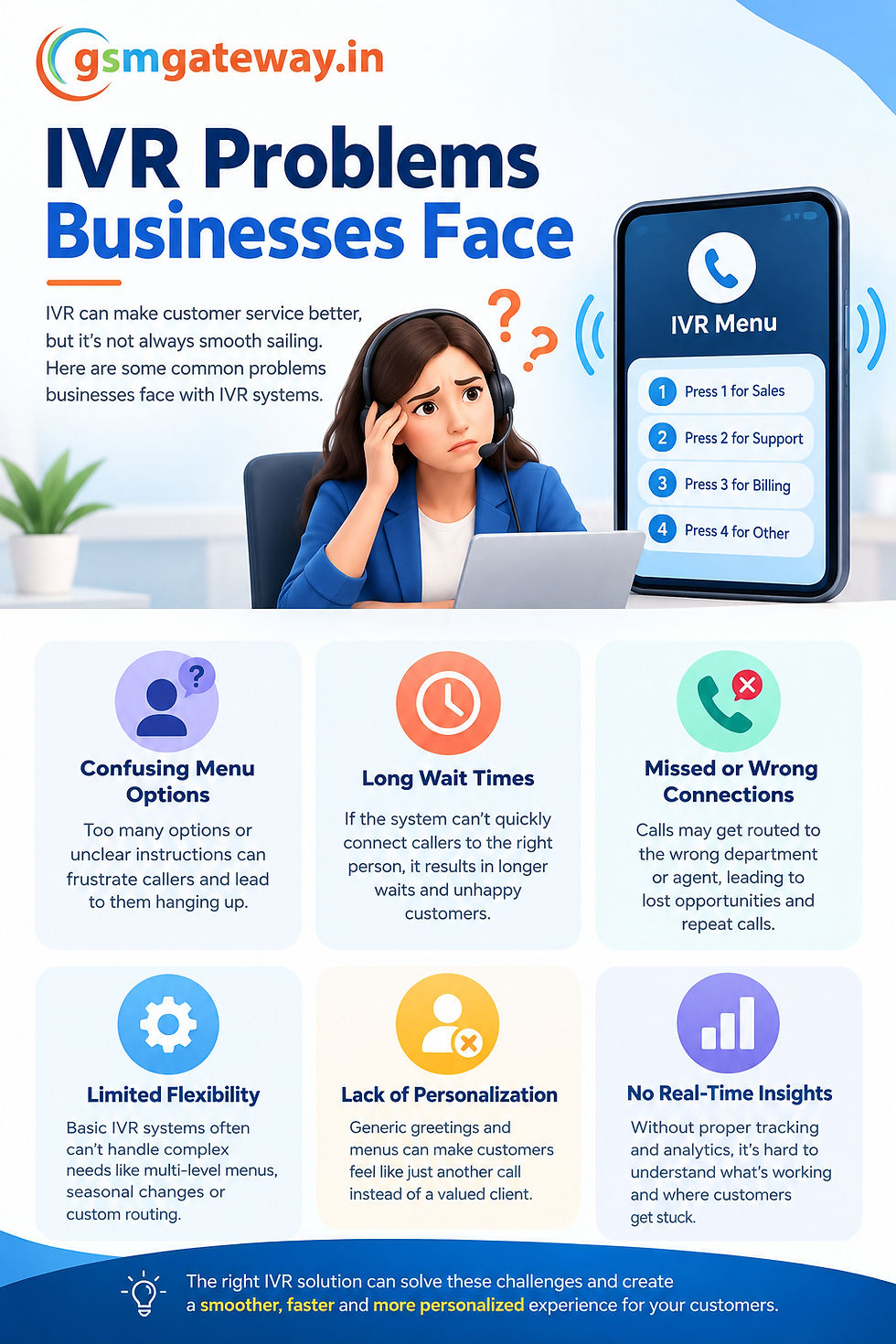
Interactive Voice Response (IVR) systems are a tool that businesses use to manage incoming calls, route customers and connect callers to the right department. A well-functioning IVR can reduce call wait times and improve customer service.
Not all IVR systems are good though. These are all common business problems – hard-to-comprehend choices, long waits, poor call routing, and outdated technology. These problems can make customers angry and give help teams more work to do.
In this article we will go over the most common IVR issues businesses have and how to fix them.
What Is an IVR System?
An IVR system is an intelligent telephone system that talks with callers, collects information and routes calls to the proper caller. The IVR, when a customer calls a firm, might say:
Press 1 for sales. Press 2 for help. Press 3 for billing.
Then it connects the caller automatically to the right area or gives information.
IVR is a popular use by business such as banks, hospitals, e-commerce sites, call centers, telecom etc.
1. Complicated IVR Menus
A complicated menu is one of the most typical IVR issues that businesses face.
If callers have to listen to many options before they get to the right department, they may feel unhappy. Too many layers in the menu may also confuse the consumer experience.
How to solve it:
Keep the main menu short.
Use simple language.
Provide the most common options first.
Avoid unnecessary menu levels.
Allow callers to reach a live agent when needed.
A simple IVR menu can help customers find the right service faster.
2. Long Waiting Times
Customers prefer concise voicemails. Long wait periods can raise satisfaction and may lead to hang-ups. This problem can be more serious in busy hours when numerous clients are phoning at the same time.
How to solve it:
Businesses can use intelligent call routing, queue management, and automatic callbacks. A cloud-based IVR Solutions can also help distribute calls between available agents and locations.
3. Outdated IVR Technology
Older IVR systems may lack common features and may not easily interface with newer company technologies.
For instance, an outdated system might not provide useful call reporting, CRM integration, call recording, or remote management.
How to solve it:
Busniness can explore the existing cloud IVR systems that offer more flexible features and better management of the system.
Cloud IVR also offers companies the ability to cut back on dependence on traditional on-premise hardware used to handle their phone services.
IVR Does Not Integrate With Other Business Tools
The value of IVR system is enhanced by integrating it with other systems of the company such as CRM, helpdesk software, call center software and communication platforms.
If agents are not built-in, agents may have to manually search for consumer information.
How to solve it:
Choose an IVR solution that integrates with CRM and third-party software. This can help agents collect client information and handle calls better.
Difficulty Managing IVR During Business Hours
Business hours may be subject to weekend, holiday, special event, and seasonal schedule changes. If the IVR is not current, callers might receive wrong information.
For example, a consumer may assume that agents are available even when the office is closed.
How to solve it:
Use time based IVR routing . A company can set up different call flows for working hours, after-hours, weekends and holidays.
"Clients can get the data you need, when they want it, with ease.
How Businesses Can Improve Their IVR System
Solving IVR problems businesses face starts with understanding the customer journey. Businesses should regularly review their IVR menu and identify where customers face delays or confusion.
A good IVR should:
Use simple and clear menu options
Reduce unnecessary waiting
Route calls to the right department
Provide an easy way to reach agents
Offer accurate business-hour information
Explore More: 10 Questions to Ask Before Choosing a Cloud IVR Provider
Conclusion
IVR can be a key element of modern company communication, but a badly built system may lead to more issues than it solves. Businesses commonly face several IVR issues, including complex menus, long wait times, bad routing, outdated technology, and limiting integrations.
The answer is not more automation. What companies need to do is offer a simple, quick, customer-friendly call experience.
A properly developed IVR solution can help companies optimize call routing, reduce wasteful transfers, better serve customers, and provide their teams more control over incoming calls.


Comments